Until We Are Together Again Widgt
| Fad Gadget | |
|---|---|
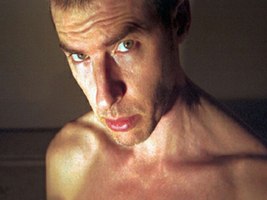 Fad Gadget in 2001 | |
| Background data | |
| Birth name | Francis John Tovey |
| Born | (1956-09-08)viii September 1956 London, England |
| Died | 3 April 2002(2002-04-03) (aged 45) London |
| Genres | Industrial, new wave, synthpop, post-punk |
| Years active | 1979–1993 2001–2002 |
| Labels | Mute |
| Associated acts | Frank Tovey & The Pyros |
| Website | fadgadget |
| Past members | John Dignham, Cam Donnelly |
Francis John Tovey (8 September 1956 – 3 April 2002), known besides by his phase name Fad Gadget, was a British advanced electronic musician and vocalist. He was a proponent of both new moving ridge and early industrial music, fusing together a unique alloy of popular structured songs mixed with mechanised experimentation.
Every bit Fad Gadget, his music was characterised by the use of synthesizers in conjunction with sounds of found objects, including drills and electric razors. His bleak, sarcastic and darkly humorous lyrics were filled with biting social commentary toward subjects such as mechanism, industrialisation, consumerism, homo sexuality, mass media, organized religion, domestic violence and dehumanization while often being sung in a deadpan voice.
Early years [edit]
As a child, Frank Tovey lived in Bow. His father, Frank Tovey, Sr. was a porter in Billingsgate Fish Market.[ane] At school, Francis tried to learn many dissimilar musical instruments. He realised he did not have the co-ordination to be able to play whatsoever of them really well. Tovey drifted abroad from the idea of playing music, and began getting involved in other art forms instead. He later studied visual arts and mime at Leeds Polytechnic. He felt the need to requite his mime act some sort of musical accompaniment then he went dorsum to the thought of recording music. The initial musical pieces were formed of sound manipulation using tape recorders.[2]
Tovey began experimenting using an one-time Grundig tape recorder. He asunder the erase head from the playback head and installed a simple switch betwixt the two. This gave him command over what sounds could exist erased or kept. He spent a lot of time building up sound collages using this method. After finishing total-time education Tovey began working at various jobs and around the mid seventies managed to prepare up his ain home studio. At the fourth dimension he was living in London, in a small house. The only space where he could set up his studio was in a cupboard. The initial equipment he used consisted mainly of his Grundig record recorder. At this fourth dimension he was using no musical musical instrument at all. The first keyboard instrument he endemic was a Crumar Compac electric piano. He besides bought a Korg Minipops pulsate machine from a habitation organ shop. He eventually decided to purchase a Korg synthesiser. He thought that due to his lack of musical ability he would be able to create some impressive sounds. Later on the purchase of this equipment he began writing music seriously; it was at this time he sent a demo tape of "Back to Nature" to Daniel Miller, who had just released his kickoff single equally The Normal.[ii]
Signing to Mute records [edit]
Frank Tovey signed as Fad Gadget to Daniel Miller'due south Mute Records. He was the first creative person to sign to Mute.[3] "Dorsum to Nature" was recorded every bit the second Mute Records release at RMS Studio in London. At the time RMS was an eight rail studio. Gadget had no real experience of recording within a studio environment, so he left nearly of the decision making to Daniel Miller. Most of the recorded instruments on "Back to Nature" belonged to Tovey, although he used equipment belonging to Miller every bit well; this included an ARP 2600 synthesiser.[2]
"Back to Nature" was a cracking success for Mute Records so a follow-up record was produced; the follow-upwards was titled "Ricky'southward Hand". The recording included Gadget'due south wife, Barbara, singing a song part near the end of the recording; the song part is so mixed with a synthesiser office into the outro of the song. Fad Gadget and so went on to record an album for Mute Records. Fireside Favourites was recorded at Blackwing Studios in London. He decided to tape the album without Daniel Miller'south assistance.[two]
Gadget felt it was of import that he made all the decisions about recording the album himself. Gadget also felt the ideas and concepts behind his live performances were just every bit important. His alive appearances progressed to dressing in theatrical costumes, reflecting dorsum to his days studying visual arts,[2] and he quickly became known for his confrontational stage antics. Some of these included roofing himself in tar and feathers, swinging his microphone like a whip, leaping backwards into the audience, dancing across bar tables while kicking over people's drinks, climbing upward speakers, hanging from ceiling fixtures, pulling out his torso hair and playing instruments with his head, often ending up in personal injury. Gadget was peculiarly infamous for spreading shaving cream on his naked torso onstage, an image of which is depicted on the cover of The All-time of Fad Gadget. Sounds magazine described him as "...the bumbling simply talented Dr Who of electro-pop".[four] In 1981 Gadget released some other one-off single on Mute Records, "Make Room", featuring the b-side "Lady Shave", which went on to become "i of his most iconic tracks".[5]
Recording [edit]
Fad Gadget recorded two more albums for Mute Records at Blackwing Studios which was using more than circuitous recording equipment. Incontinent and Nether the Flag showed a progressive alter in Gadget'due south music; due both to the technological advances and his own growing knowledge of recording techniques. It was during the recording of Under the Flag that he began using the Roland MC-4 Microcomposer. This made it easy for Tovey to create a more controlled style of music. This style was carried on with the recording of the album Gag.[2]
The recording of Gag was a turning point in Gadget'due south recording career. It would be the first time he used a band of musicians to record an album; before he had recorded most of the musical parts himself. Information technology would as well meet a major change in the recording location from London to Hansa Tonstudio in Berlin. He had wanted a break from the style he had been recording in London. The acoustic spaces in the German studio had excited Gadget. He was likewise excited about the recording equipment that was installed at Hansa at that time, including the computer controlled mixing desk. He found the new recording practices refreshing, having other people collaborating in the writing and recording process. Some of these collaborators included the viola thespian, Joni Sackett, and keyboard player, David Simmonds. The recordings included many acoustic instruments, which veered away from the electronic instruments which had been used on previous recording sessions. Fad Gadget had used synthesisers when they were not fashionable to utilise – he had now moved away from electronic instrumentation when it was the current trend with other recording artists. During the recording of Gag the German industrial ring, Einstürzende Neubauten, were recording for Some Bizzare Records at Hansa and had been the support act for Fad Gadget at a gig at "The Loft" venue in Berlin. Frank liked their use of industrial equipment and establish objects, something he had encouraged Nick Cash (his drummer and percussionist since his beginning album) to do. Fad Gadget heard a large printing printing nearby which had a distinctive rhythm and got Gareth Jones, the co-producer/engineer, to tape information technology. The recording was looped and became the footing for "Collapsing New People." (Einstürzende Neubauten translated ways, "collapsing new buildings.")[2] The sample was used firstly on two tracks on Fad Gadget's "Collapsing New People" 12" released Nov 1983. All these recordings were engineered by Gareth Jones and the sample used was stored on his Akai sampler with Cash drumming along and keeping the swing of the machine. Gadget so idea it would exist good to enquire Neubauten if they would add some of their percussion noise to the mix; nonetheless, Frank thought in that location was enough going on in the track and their contribution was used on the b-side "Spoil The Child" and on the 12" mix of the song. Neubauten'due south percussion was overdubbed over the already recorded backing tracks. The percussion tracks proved difficult to mix at the final stage, but Gadget was pleased with the final result. The rail "Collapsing New People" was released equally a single by Mute Records.
After recording the album Gag, Gadget began recording under his real name – Frank Tovey. He carried on moving toward audio-visual instruments and in 1984 had decided he might want to record on his own again.[2] He recorded several LPs of more than experimental work under the proper noun Frank Tovey, beginning with Easy Listening for the Hard of Hearing, a collaboration with Boyd Rice recorded in 1981.[3]
In 1989, he changed musical tactics in his criticism of industrialisation, recording a mostly acoustic album of protest and labour songs Tyranny and the Hired Mitt including such standards every bit "Xvi Tons." He then tried his mitt at writing similar material, recorded two more than albums with a backing band named The Pyros. After touring in 1993, Gadget withdrew from the music business.[three]
Concluding years [edit]
In his afterward years, Gadget began to perform at festivals and likewise supported his former colleagues and Mute label-mates, Depeche Mode, on their European tour. He was working on a new album at the time of his death. Fad Gadget suffered from eye problems since babyhood, and died of a middle attack on 3 April 2002 at the age of 45.[3] In 2006, with the Pyros and family unit, he has two movies dedicated to him, Fad Gadget by Frank Tovey and Thousand Union: A Documentary.[half dozen] [7]
Legacy and influence [edit]
Despite lack of commercial success, Fad Gadget was regarded equally a pioneer in Synthpop, Electro and industrial music.[8] [ix] [10] [xi] He influenced bands and artists such as Depeche Mode,[12] Erasure,[13] Boy George (of Culture Guild),[14] Information Society,[fifteen] cEvin Cardinal (of Skinny Puppy),[16] Liars,[17] [18] The Twilight Sad,[19] DJ Premier,[20] and Suicide Commando.[21]
John Frusciante (of the Ruddy Hot Chili Peppers) listed Fad Gadget's Under the Flag in his meridian 40 favorite albums of all fourth dimension.[22]
His album Gag was ranked #76 in Treblezine's list of "The Top 100 Best Post-Punk Albums".[23]
Discography [edit]
Footnotes [edit]
- ^ "INSIGHT: Terry Murphy « Home / A Depeche Manner website". Depeche-mode.com.
- ^ a b c d e f chiliad h Goldstein, Dan (April 1984). "Fad Gadget Interview". Electronics & Music Maker magazine (E&MM).
- ^ a b c d Strauss, Neil (15 April 2002). "Frank Tovey, 46, Industrial-Music Innovator". New York Times . Retrieved 15 May 2008.
- ^ Gimarc, George (1 July 2005). Punk Diary: The Ultimate Trainspotter'due south Guide to Underground Stone, 1970–1982. Backbeat Books. p. 343. ISBN978-0-87930-848-3.
- ^ Zevolli, Giuseppe (17 March 2014). "Drowned In Sound". Drowned In Sound. Archived from the original on ten August 2016. Retrieved three May 2016.
- ^ "PUBLISHED IN SIDE-LINE MAGAZINE Review of "Fad Gadget by Frank Tovey- A Retrospective In Sound And Vision (2dvd/dcd Mute)"". Retrieved 13 May 2018.
- ^ "FAD GADGET BY FRANK TOVEY". 11 September 2006. Retrieved thirteen May 2018.
- ^ John Bergstrom (xi September 2019). "Synthpop Pioneer Fad Gadget'southward Music Is Finally Back in Release". PopMatters. PopMatters Media, Inc. Retrieved 21 December 2020.
- ^ Daphne Carr (2 March 2012). "Jubilant the life and work of Frank Tovey, whose band Fad Gadget set a course for contemporary pop". Politico. Politico LLC. Retrieved 21 December 2020.
- ^ Neil Strauss (xv April 2002). "Frank Tovey, 46, Industrial-Music Innovator". New York Times . Retrieved 21 December 2020.
- ^ Andy Kellman. "Fad Gadget". Allmusic. AllMusic, Netaktion LLC. Retrieved 21 December 2020.
While Fad Gadget's contemporaries included the likes of Cabaret Voltaire, the Homo League, Wire, the Normal, and Soft Prison cell, Tovey and company's records never quite accomplished the surreptitious notoriety or the nautical chart success enjoyed by his peers. Regardless of the level of recognition, Tovey's unique contribution to electronic music is undeniable, so is his influence upon information technology. As the years go on, the recognition continues to gather steam.
- ^ "(Documentary) Fad Gadget by Frank Tovey". YouTube. Mute Films. Archived from the original on 22 December 2021. Retrieved 1 Dec 2020.
Dave Gahan: "[Fad Gadget] definitely afflicted Depeche Way in a big manner and I'm certain you know hundreds of other bands.
"Fad Gadget by Frank Tovey". IMDB. Mute Films. 2006. Retrieved 1 December 2020. - ^ "Synth Britannia (Role Two: Structure Time Over again)". Britannia. xvi October 2009. four minutes in. BBC Four. British Broadcasting Corporation.
Vince Clarke: "When I beginning started playing synthesizers information technology [my inspiration] would take been people similar the Human League; Orchestral Manoeuvres in the Nighttime, their very offset album; I was a big fan of Daniel Miller's work, as the Silicon Teens and every bit the Normal; and also of Fad Gadget, who was on Mute Records."
- ^ Dan Stubbs (23 Nov 2018). "Culture Gild'southward Boy George: The Original Gender-fluid Popular Icon Versus The Modernistic World". NME. NME. Retrieved 21 Dec 2020.
Corinne Jones; Male child George (26 January 2014). "Boy George: Soundtrack of My Life". The Guardian. Guardian News & Media Limited. Retrieved 21 December 2020.It wasn't enough to be a practiced musician, you had to have a good look too! It was around that signal that I was discovering early Homo League, bands like Cabaret Voltaire, I was already a massive fan of Fad Gadget, who, for me, was the king of electro – the unsung hero.
- ^ Greg Prato (6 May 2016). "Information Social club: 'xc'due south Industrial Rock Has Not Aged Well'". Alternative Nation. Culling Nation. Retrieved 22 March 2022.
Paul Robb: "'Orders of Magnitude' grew organically over the yr that we worked on information technology. One thing we wanted to make certain of was that none of the tracks were obvious choices. Fifty-fifty "Don't You Desire Me" by the Human being League we even idea might be a surprise, considering it's the song most associated with that grouping, so who would dare to cover it? Most of the songs on the album were originally performed past artists that were influences on our own work, sometimes musically, sometimes just with their approach to pop. Snakefinger, for instance, was a weirdo-guitar god, so in that sense, we weren't hugely influenced by him musically, but his mode and his association with the Ralph Records empire fabricated him a hero to usa. Devo, Fad Gadget, and Heaven 17 were huge heroes of ours. The other songs were mostly spur of the moment decisions, based on hazy and sometimes terrifying memories from our teen years and childhoods."
- ^ Ernie Rideout (2011). Keyboard Presents the Evolution of Electronic Dance Music. Backbeat. ISBN9781617134470.
Interviewer: "Each of you brings a unique approach to sound design and composition inside the EBM/industrial scene. Who are your biggest influences, musical or otherwise?" cEvin fundamental: "Kraftwerk, Y.M.O., Man League, Fad Gadget, and Joy Partition."
- ^ Paul Lester (iii July 2014). "Cult music heroes: artists on their unsung idols". The Guardian. Guardian News and Media Express. Retrieved 22 March 2022.
- ^ Mike Rubin (15 June 2012). "Liars Pause Downward the Electronic Influences That Shaped 'WIXIW'". SPIN. SPIN. Retrieved 22 March 2022.
Hemphill: "One thing that inspired us to employ more electronic instruments was we played a Mute Records festival. We've always been enlightened of the history of Mute, just I think nosotros really sort of wanted to be more a part of that. Mute put out a compilation called Mute Audio Documents and it's a collection of all their singles from 1978 to 1984 and that was actually inspiring. It has to do with the scope of music produced over that fourth dimension and how certain people used electronics, be it Robert Rental or Thomas Leer or Fad Gadget, all of whom we're large fans of. In that location'due south an excerpt from an album that Boyd Rice did with Frank Tovey, who is Fad Gadget, called Piece of cake Listening for the Hard of Hearing, I call back it's track ii, only it'southward really beautiful, and they made it in the studio without any instruments evidently, merely fabricated it on the spot."
- ^ Danny Wright (10 February 2012). "Standing On Our Own // The 405 meets The Twilight Sad". The 405. Archived from the original on 28 June 2018. Retrieved 22 March 2022.
So where has this way come from? It seems to accept been influenced by many things, though two stand up out. Firstly, the influence of guitarist and chief songwriter Andy MacFarlane: "He's been going back to listen to sometime records as he doesn't like a lot of new music. He's e'er listened to the bands that have influenced his writing on this album but I remember these bands have came to the forefront, Siouxsie And The Banshees, Can, PiL, Fad Gadget, Cabaret Voltaire, Wire, Bauhaus, Magazine, D.A.F. etc."
- ^ The FADER; Mark Ronson (one November 2021). "DJ Premier on Gang Starr, '80s synth pop, and Biggie's comedic side". Fader. The Fader, Inc. Retrieved ten February 2022.
- ^ Ramona Depares (29 October 2017). "The Darker Side of Music - Ramona Depares interviews Johan Van Roy, frontman for EBM outfit Suicide Commando, ahead of the ring's performance in Malta". Times of Malta. Times of Malta. Retrieved 21 Dec 2020.
Johan Van Roy: "I actually grew upwards with the new and common cold wave movement in the early on 1980s, with bands like The Cure, Joy Partition and Sisters of Mercy. Until 1 day I discovered bands like Depeche Mode, Front 242, Fad Gadget and Klinik. Information technology is obvious that all these bands in some way influenced me and my music; undoubtedly, even the cold atmosphere of new wave bands similar The Cure or Joy Sectionalisation had an touch on on me, non only equally a human being simply also on my music."
- ^ Far Out Staff (iv Dec 2020). "From Jimi Hendrix to Frank Zappa: John Frusciante's 40 favourite albums of all fourth dimension". Far Out. Far Out Mag. Retrieved 21 December 2020.
- ^ Treble staff (22 October 2018). "The Top 100 Post-Punk Albums". Treble. Treble Media. Retrieved 21 December 2020.
Farther reading [edit]
- Frank Tovey Feature
External links [edit]
- Official Fad Gadget Site
chalmersforen1982.blogspot.com
Source: https://en.wikipedia.org/wiki/Fad_Gadget

Post a Comment for "Until We Are Together Again Widgt"