Does a Child With Epilepsy and Grows Out of It Have It Again in Later Life
By: Marissa Di Giovine, MD, FAAP & Eva Catenaccio, Medico
Epilepsy, too called seizure disorder, is the most common childhood brain disorder in the Us. Nearly 3 million Americans have epilepsy. Most 450,000 of them are under 17 years former.
Epilepsy can cause repeated seizures, which are sudden surges of electrical activeness in the brain. Virtually two-thirds of all children with epilepsy outgrow their seizures by the time they are teenagers. For some, though, epilepsy may be a lifelong status. Information technology is important for parents to partner with their health care providers to help understand their kid's status and treatment.
Understanding epilepsy and seizures
There are many different types of seizures. Some are very short, lasting only a few seconds, while others can last a few minutes. Some can cause uncontrollable jerking movements, while others cause them to be confused or stare blankly. The type of seizure a person has depends on where the seizure occurs in the brain and how much of the brain is involved.
Improvements in epilepsy treatment in recent years have made the condition more than manageable. Many new anti-seizure medications are available and more are being tested. In addition to newer medications, alternative treatments such as surgical procedures, medical devices, and dietary therapies, are as well available for children and teens who continue to have seizures while on medication.
How is epilepsy diagnosed?
Epilepsy is often diagnosed if a child or teen:
-
has had more than ane seizure not directly caused past another medical condition, such as diabetes or a astringent infection
-
has a high risk for boosted seizures, based on their medical history or the results of medical tests
Whatsoever kid without a known diagnosis of epilepsy who experiences a first-time seizure needs firsthand emergency medical attending . They should also have a follow-upward visit with their main intendance pediatrician soon afterwards. If seizures happen once more, they need to see a pediatric neurologist, a specialist who manages seizures and epilepsy.
| Finding Answers Most EpilepsyBy: Dylan Di Girolamo By the time I got to loftier schoolhouse, I realized something wasn't right. My doctor referred me to a neurologist, who ran tests but plant nothing wrong. Deciding that these foreign episodes may not be neurological, but psychological, they referred me to a psychologist. The episodes continued to get worse and more frequent, and I was starting to get really scared. The psychologist asked me to keep rail of when my episodes happened and, if possible, go videos of them. My shut friends and family members were able to record a couple of of them. Ane twenty-four hours, as I was leaving his function, I had a really scary incident. I was walking to the bus terminate, but the side by side affair I knew I was in the back of a police automobile. I plain had set up my haversack at the motorcoach end and went to sit in the middle of the road. The officers thought I was trying to injure myself. I tried to explain that I sometimes got these episodes when I wasn't fully witting and would practise things that seemed strange. I gave them my psychologist's number, and he backed me upward. The police permit me become. My psychologist, convinced something more than psychological was going on, talked with my neurologist. Later a few months and lots more tests, I was officially given a diagnosis: epilepsy, and more than specifically, focal seizures with impaired awareness. Unfortunately, medicine does not seem to fully cease my seizures. I am working with a team of doctors to explore other possible treatments. I also go along to meet with my psychologist to discuss means to handle stress, since stressful weeks do seem to act every bit a trigger for me. During those weeks, I do my best to get plenty of slumber and eat properly and so my trunk is not stressed out. I also try to detect time for relaxing activities similar going out to eat with friends, working out at the gym, and playing soccer. Having epilepsy, I know I need to take actress precautions. But it won't stop me from working toward my goals. I graduated from college and now teach uncomplicated students. And I will continue to search for answers about epilepsy. Dylan Di Girolamo is a Young Adult Council member of the American Academy of Pediatrics National Coordinating Center for Epilepsy. |
|---|

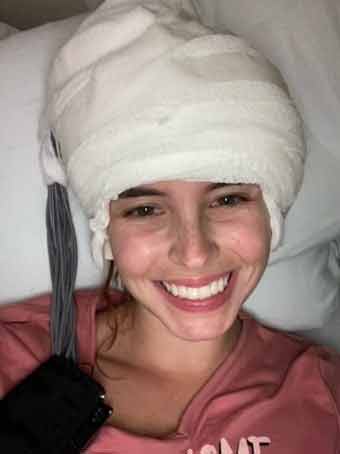 I was officially diagnosed with epilepsy in 2017, though my seizures started years earlier. I would get these weird feelings of nausea and think I was about to throw up, merely never did. As I got older, the nausea would start, and so I would forget where I was for two or iii minutes. I was able to talk during these episodes, but I wouldn't make whatsoever sense.
An epilepsy diagnosis varies for each child, just major steps in the process frequently include:
-
Detailed medical history: This may include questions about the female parent's pregnancy and commitment; whether in that location are any relatives with epilepsy; and whether your child has had a prior history of serious caput injury, infections involving the brain or a prior history of seizures with fever (febrile seizures).
-
Detailed accounts of the seizure: Whoever was with your child when they had a seizure should talk with the doctor. Videos taken of your child during their seizure also can be helpful as well.
-
Concrete exam: In addition to a regular physical test, the doctor will check your child's mental and neurologic function. This will include testing musculus strength and reflexes, for case, likewise as senses and memory.
-
Blood tests to aid place other, underlying illnesses that could be causing seizures.
-
Computerized Axial Tomography ( CAT ) or CT Scan to help make up one's mind if a seizure was caused by a recent injury or illness affecting the nervous organisation.
-
Electroencephalogram ( EEG ) to help gauge how likely information technology is a seizure will happen again. An EEG can as well help determine the blazon of seizure affecting your child, and whether it may be part of a certain epilepsy syndrome or pattern.
-
Magnetic Resonance Paradigm ( MRI ) to get a picture of the brain. This is especially important if your child is having new seizures or seizures that may have started in a particular role of the brain.
-
Observation. In addition to the test and tests, a period of observation tin assist make up one's mind whether a child has epilepsy.
If your child is diagnosed with epilepsy
If your child is diagnosed with epilepsy, it is important to keep working with their medico to classify the type of seizures and epilepsy they have. That will aid guide treatment options. Since seizures exercise not often happen in the doc'southward function, exist sure to watch and runway whatever unusual behavior and report it to their child's md. At-home videos can be very helpful!
How is epilepsy treated?
Treatment for epilepsy normally begins with medication. However, it is important to call back that epilepsy is a circuitous condition, and every child is unlike. Non every kid responds to handling in the same way, and then there is no one "right handling."
Seizure-prevention drugs
At that place are many seizure-prevention medications, called anti-seizure drugs, and new ones in development. However, it sometimes takes a while to find the 1 that works best for each kid.
These medications do not change the underlying cause of your child has seizures. They merely treat the symptoms of epilepsy by reducing the frequency of seizures. The medication volition not work properly until information technology reaches a certain level in the body, and that level has to be maintained by taking the medication regularly. For this reason, it is especially important to follow the doctor's specific medication instructions.
Antiseizure medications may have side effects, though most are tolerated well without any side effects. Sleepiness is a very common side effect, but often may meliorate as a kid's body gets used to the medication.
Other more serious side effects can include changes in bone marrow or liver part, or serious rashes. Information technology is important to talk to with your child'due south medico nearly possible side effects before starting a new anti-seizure medication. And if your kid experiences side effects while on a medication it is important to let your doctor know then you tin make up one's mind together whether the medication is correct for your kid.
If medication does not work, other options include:
-
Brain surgery
-
Medical devices to forbid and command seizures (for example a vagal nerve stimulator (VNS), a responsive neurostimulator (RNS), or a deep encephalon stimulator (DBS))
-
Dietary therapies (e.g. ketogenic diet, modified Atkins diet, depression glycemic index handling)
How long does a child need to accept medication for epilepsy?
If your kid does non have a seizure for a few years while taking medication, information technology may be possible to stop taking information technology. This is dissimilar for every kid. Your child should never stop taking medication unless recommended and closely supervised past their doc.
Shared decision making for children with epilepsy
Information technology's best to piece of work together with your child's doctor to make decisions and choose tests and treatments, taking into business relationship the potential risks and benefits of each option too as your family unit'southward preferences and values. Shared decision making is peculiarly of import in epilepsy. This is because there is often no one right treatment, and possible risks and benefits of each option may bear on each child differently.
Exist sure to ask questions nigh different tests or treatments and share any special concerns or circumstances you may accept. Examples of shared conclusion-making for epilepsy treatment include:
-
Choosing a medication based on the dosing schedule (taking a medication daily versus twice daily), available formulations (tablets, capsules, or liquids), or the need for laboratory monitoring.
-
Deciding whether or non to echo imaging studies based on whether a child will need to be sedated, or when to schedule additional testing based on a child'due south school schedule
Risks for other medical issues
Epilepsy can increase a child's chance of having a mood or learning disorder. Headaches and other concrete conditions are too common. It is of import for parents to know most possible related conditions, also chosen "co-morbidities," and talk to their child'south doctor about any concerns.
More information
- Seizures and Epilepsy in Children
- How to Support a Child with Epilepsy: Data for Parents
- What is a Child Neurologist?
- Epilepsy Foundation
- Epilepsy in Children: What to Ask Your Doctor
Well-nigh the authors
| |
| |
 Marissa Di Giovine, MD, FAAP, is a Pediatric Neurologist who subspecializes in epilepsy. She currently holds the position of Assistant Professor of Clinical Neurology at the University of Pennsylvania's Perelman Schoolhouse of Medicine and is an agile member of the Pediatric Regional Epilepsy Program at the Children's Hospital of Philadelphia. She is an Advisory Commission fellow member of the National Coordinating Center for Epilepsy, a member of the American Academy of Pediatrics Department on Neurology, and a founding member of the American Academy of Pediatrics' Committee on Mentorship.
  Eva Catenaccio, Medico, is a Pediatric Epilepsy Fellow at Children's Hospital of Philadelphia.
The information independent on this Spider web site should non be used every bit a substitute for the medical care and communication of your pediatrician. There may be variations in handling that your pediatrician may recommend based on individual facts and circumstances.
chalmersforen1982.blogspot.com
Source: https://www.healthychildren.org/English/health-issues/conditions/seizures/Pages/Epilepsy-in-Children-Diagnosis-and-Treatment.aspx

Post a Comment for "Does a Child With Epilepsy and Grows Out of It Have It Again in Later Life"